In early times medical care on the battlefield was practically non-existent. If one was unfortunate enough to be seriously wounded, the best one could hope for was a speedy despatch from the scavengers who swarmed on to the battlefield to loot the corpses of the fallen. A person of high birth might expect slightly better treatment - a live body to ransom was worth more than a dead one.
During the nineteenth century war became more devastating due to technological advances in armaments, and educated people began to concern themselves with the provision of humanitarian aid to casualties. The Red Cross was formed in 1863 following the Battle of Solferino, and the first Geneva Convention on the treatment of battlefield casualties was signed a year later.
In Britain, the British National Society for Aid to the Sick and Wounded in War was formed in 1870, and operated under the Red Cross emblem during the Franco-Prussian War and several other conflicts towards the end of the 19th century. In 1905 it became the British Red Cross Society.
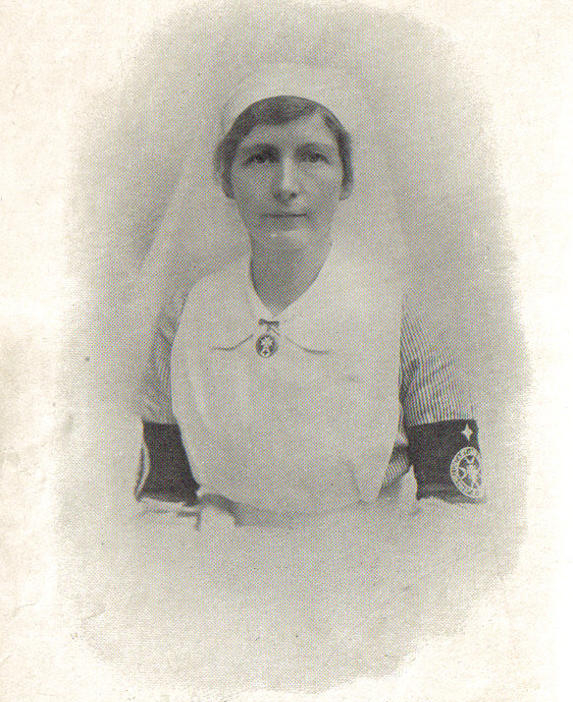
In 1909 the British Red Cross Society was given the role of providing supplementary aid to the Territorial Forces Medical Service in the event of war. In order to provide trained personnel for this task, county branches of the British Red Cross Society organised units called Voluntary Aid Detachments. All Voluntary Aid Detachment members, who came to be known simply as "V.A.D.'s" were trained in First Aid and Nursing. Within twelve months they numbered well over 6000.
Following the outbreak of war in 1914 the number of Detachments increased dramatically. The British Red Cross Society and the Order of St John of Jerusalem, a body which was also empowered to raise detachments under the War Office Voluntary Aid Scheme, combined to form the Joint War Committee in order to administer their wartime relief work with the greatest possible efficiency and economy, under the protection of the Red Cross emblem and name.
V.A.D.'s, who initially were mostly middle-class women eager to "do their bit," performed a variety of duties. At home the organisation administered auxiliary hospitals and convalescent homes and much of the V.A.D. service consisted of general nursing duties and administering first aid. Qualified nurses were also employed to work in these establishments. In addition, clerical and kitchen duties were performed by V.A.D.'s, and as many men were engaged in military service, female V.A.D.'s took on roles such as ambulance drivers, civil defence workers and welfare officers.
The first V.A.D. hospital to be opened in the north east appears to have been at West Hartlepool, where a V.A.D. detachment formed by Dr H.W.M. Strover had been registered at the War Office as early as June 29th 1911. On the outbreak of war it was determined that there was insufficient hospital accommodation for the large garrison in the town. At the instigation of Lt-Colonel Robson, the Garrison Commander, a V.A.D. hospital with 25 beds was created in the Masonic Hall on August 9th 1914, and the first patients were admitted 2 days later. Dr Henry Strover was the Medical Officer and his wife Margaret was the Commandant.
During the bombardment of Hartlepool by the German Navy on 16th December 1914 conditions in the hospital were described as being like a casualty clearing station near the front line, and the building itself was struck by a shell. Eventually the building became too small for the purpose, and the hospital was relocated in June 1915 to Normanhurst, a large house on the outskirts of the town, loaned by Sir William Cresswell Gray.

Many other V.A.D. Hospitals were located in similar large houses which had been loaned for the purpose by their owners. For example, Howick Hall in Northumberland was loaned by Albert, 4th Earl Grey, and his daughter Sybil served there as a nurse.
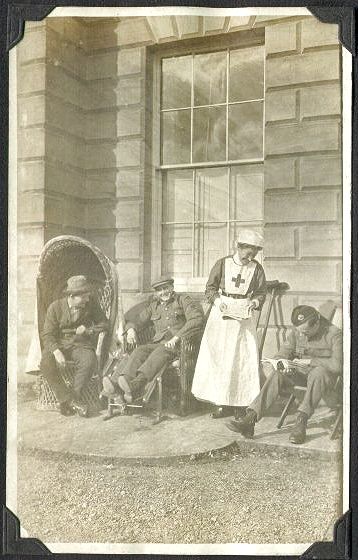
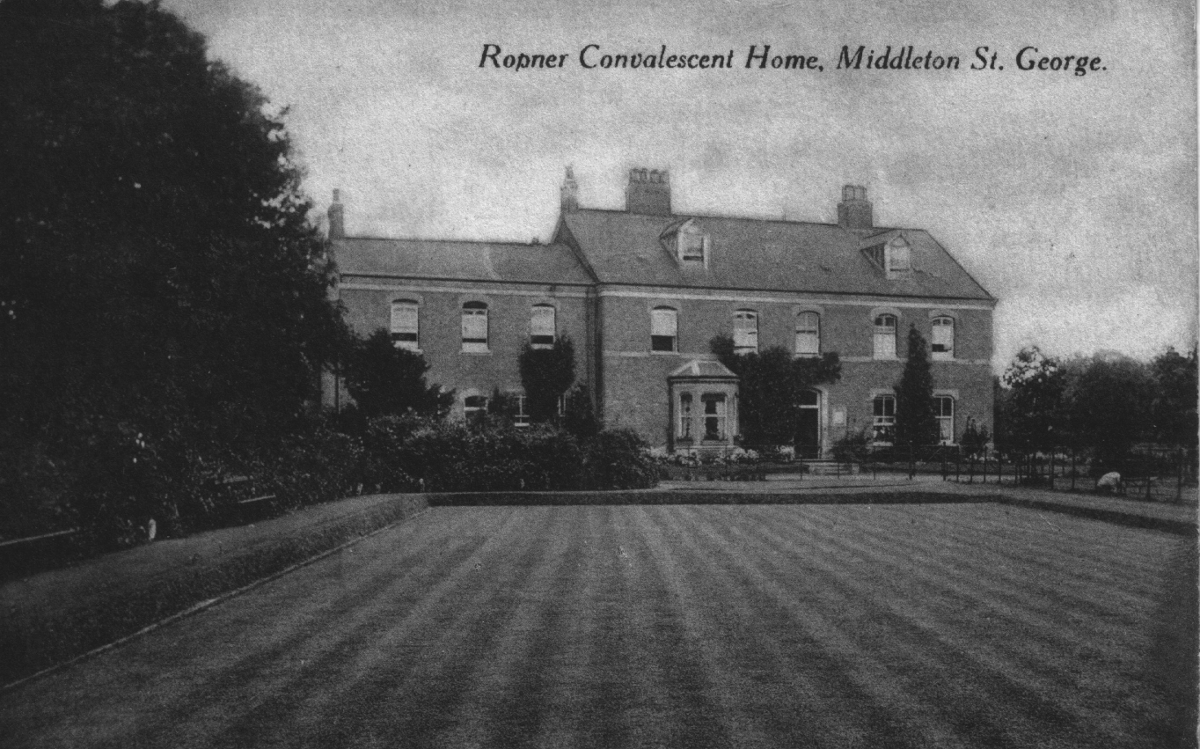
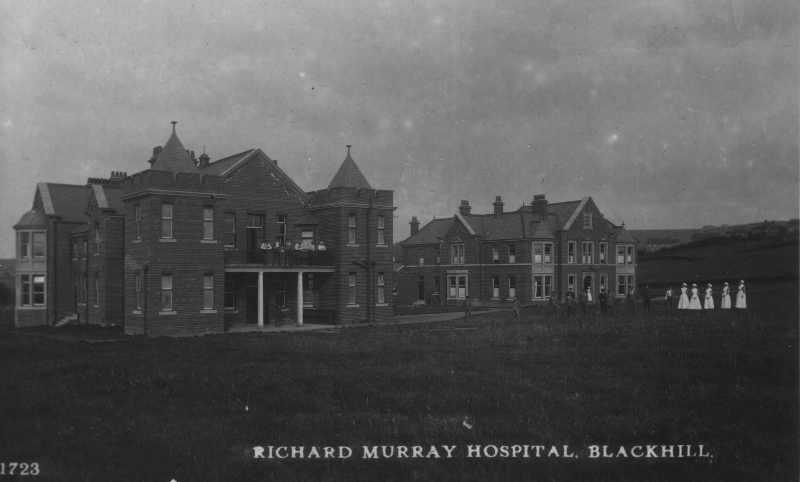
Some of them were located in previously existing hospitals - for example Hebburn Hall, the former home of the Ellison family, which had been converted into an infirmary for the town in 1896. On Teesside the Ropner Convalescent Home at Middleton St. George, endowed in 1897 by Robert and Mary Anne Ropner (of the Stockton shipbuilding family), was pressed into service as the 24th Durham V.A. Hospital. The Richard Murray Hospital in Blackhill and Ashington Infirmary also fall into this category. In these instances it seems likely that the V.A.D. operation was in addition to the normal hospital facilities. Things did not always run smoothly; in 1916 a dispute arose between the War Office and the Matron of the Richard Murray Hospital in Blackhill. This resulted in the immediate closure of the hospital. It remained closed until 1919, much to the annoyance of the local population, who had seen it open in 1914 only to be immediately commandeered by the military.
In Hexham the pre-existing convalescent home in Hextol Terrace became the 3rd Northumberland V.A.D. hospital, with an annexe in nearby Cotfield House. The Commandant here was Marjorie Henderson, whose father, Charles Henderson, owned Hexham racecourse. On 21st November 1915 the Hexham Courant reported the arrival in Hexham of a batch of wounded soldiers; "for the first time in living history, though it is possible wounded might have arrived in Hexham during Wellington's Netherlands campaign." The party comprised English, French and Belgian soldiers, who were convalescing after treatment at Armstrong College, Newcastle, itself commandeered for the duration of the war as the Northern General War Hospital. This unusual event would have become all too familiar 12 months later after the carnage of the Somme.
Not all offers of premises were taken up; Lady John Joicey-Cecil offered the use of Newton Hall, Stocksfield, as a convalescent home in August 1914 but this proposal does not appear to have been taken up. Nor was Hexham Rural Council's offer of the Lightwater Hospital in Hexham. (This had been built in anticipation of a smallpox epidemic but had not received any patients.)
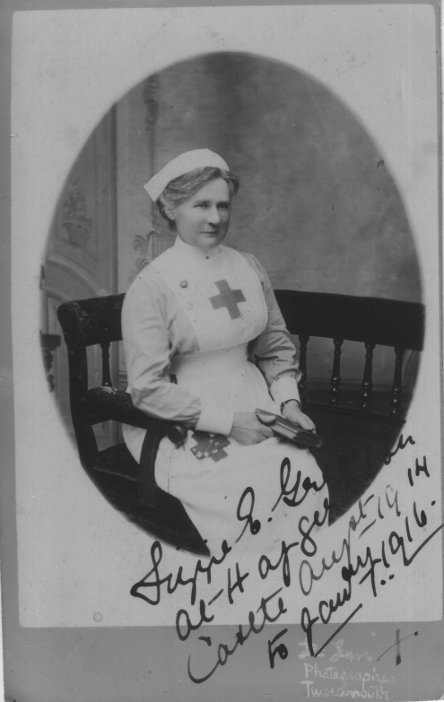
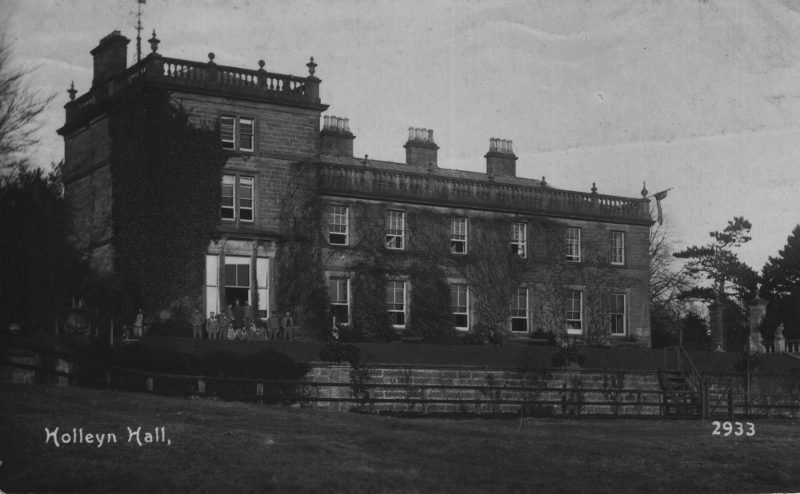
V.A.D. hospitals received the sum of 3 shillings per day for each patient from the War Office, and were expected to raise additional funds themselves. This was not difficult in those patriotic times, and the local newspapers regularly carried lists of gifts received - anonymous donations did not seem to be the fashion! The accounts for the 14th Northumberland V.A.D. hospital at Holeyn Hall, Wylam makes interesting reading:-

During the year Holeyn Hall had treated 367 patients at an average cost of 3s. 9d. per day, so the War Office allowance accounted for only 80% of the cost. (A report on Ashburne Hospital in Sunderland indicated the costs there were similar at 3s. 6d per day.)
In all, 27 hospitals were set up in County Durham (although the numbering extends to 28 there does not appear to have been a no. 26) and 17 in Northumberland. The following tables give a full list, with the current (in 2007) status of the buildings in which they were housed 2.
Durham
| Unit | Location | Present Status |
|---|---|---|
| 1st Durham VA Hospital | Whinney House & Saltwell Towers, Gateshead | Whinney House - Gateshead Academy for Torah Studies Saltwell Towers - coffee shop and resource centre within Saltwell Park |
| 2nd Durham VA Hospital | Seamans Mission, Mill Dam, South Shields | Seamans Mission |
| 3rd Durham VA Hospital | Hammerton House, 4 Gray Road, Sunderland | Private residences (building extensively modified) |
| 4th Durham VA Hospital | Jeffrey Hall, Monk Street, Monkwearmouth | Demolished |
| 5th Durham VA Hospital | 17 North Bailey, Durham | Part of St Chad's College, University of Durham |
| 6th Durham VA Hospital | Woodside, Blackwell Lane, Darlington* | Demolished in 1938 |
| 7th Durham VA Hospital | Brancepeth Castle | Private residence |
| 8th Durham VA Hospital | Normanhurst, Grange Road, West Hartlepool§ | Public House - the "White House" |
| 9th Durham VA Hospital | Long Room, Chilton Moor | Demolished |
| 10th Durham VA Hospital | Mayfield, Pine Street, Jarrow | Demolished during 1970's |
| 11th Durham VA Hospital | Social Centre, Sunderland | Now the Royalty Theatre, Sunderland |
| 12th Durham VA Hospital | Richard Murray Hospital, Blackhill | Demolished |
| 13th Durham VA Hospital | Vane House, Dawdon | Demolished |
| 14th Durham VA Hospital | Morton House, Fence Houses | Private residence |
| 15th Durham VA Hospital | Drill Hall, Parklands, Castle Eden | Demolished |
| 16th Durham VA Hospital | Shotley House, The Terrace, Shotley Bridge | Private residence |
| 17th Durham VA Hospital | The Red House, Etherley | Demolished |
| 18th Durham VA Hospital | Hebburn Hall, Hebburn | Private apartments |
| 19th Durham VA Hospital | Windlestone Hall, Rushyford | Vacant (owned by Durham County Council) |
| 20th Durham VA Hospital | St Gabriel's Institute, Kayll Road, Sunderland | Church Hall |
| 21st Durham VA Hospital | Herrington Hall, West Herrington, Sunderland | Demolished during 1960's |
| 22nd Durham VA Hospital | Mission House, Evesham Road, New Seaham | Demolished |
| 23rd Durham VA Hospital | Riversdale, Ashville Avenue, Eaglescliffe† | Private residence (now known as Riversdale Grange) |
| 24th Durham VA Hospital | Ropner Convalescent Home, Middleton Lane, Middleton St. George | Closed 1999 and converted into private apartments. |
| 25th Durham VA Hospital | Ashburne, Ryhope Road, Sunderland | Incorporated into Sunderland University Department of Arts and Design |
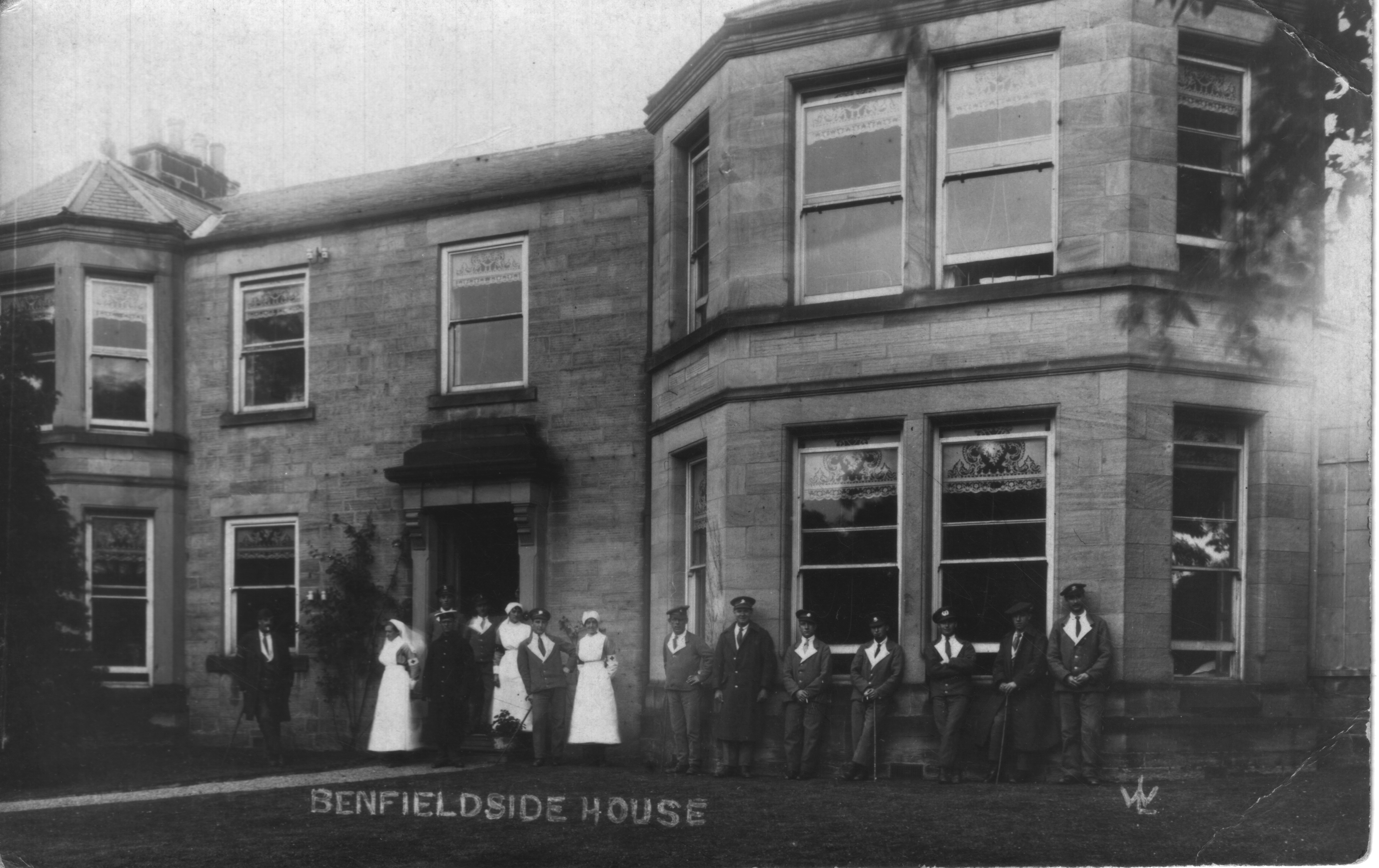
| 27th Durham VA Hospital | Benfieldside House, Benfieldside Road, Shotley Bridge | Demolished circa 1960 |
| 28th Durham VA Hospital | Seaham Hall, Seaham Harbour | Hotel |
* This hospital was originally established in the Friends' Meeting House, Darlington.
§ This hospital was originally established in the Masonic Hall.
† This hospital was originally established at "Joanville", Eaglescliffe.
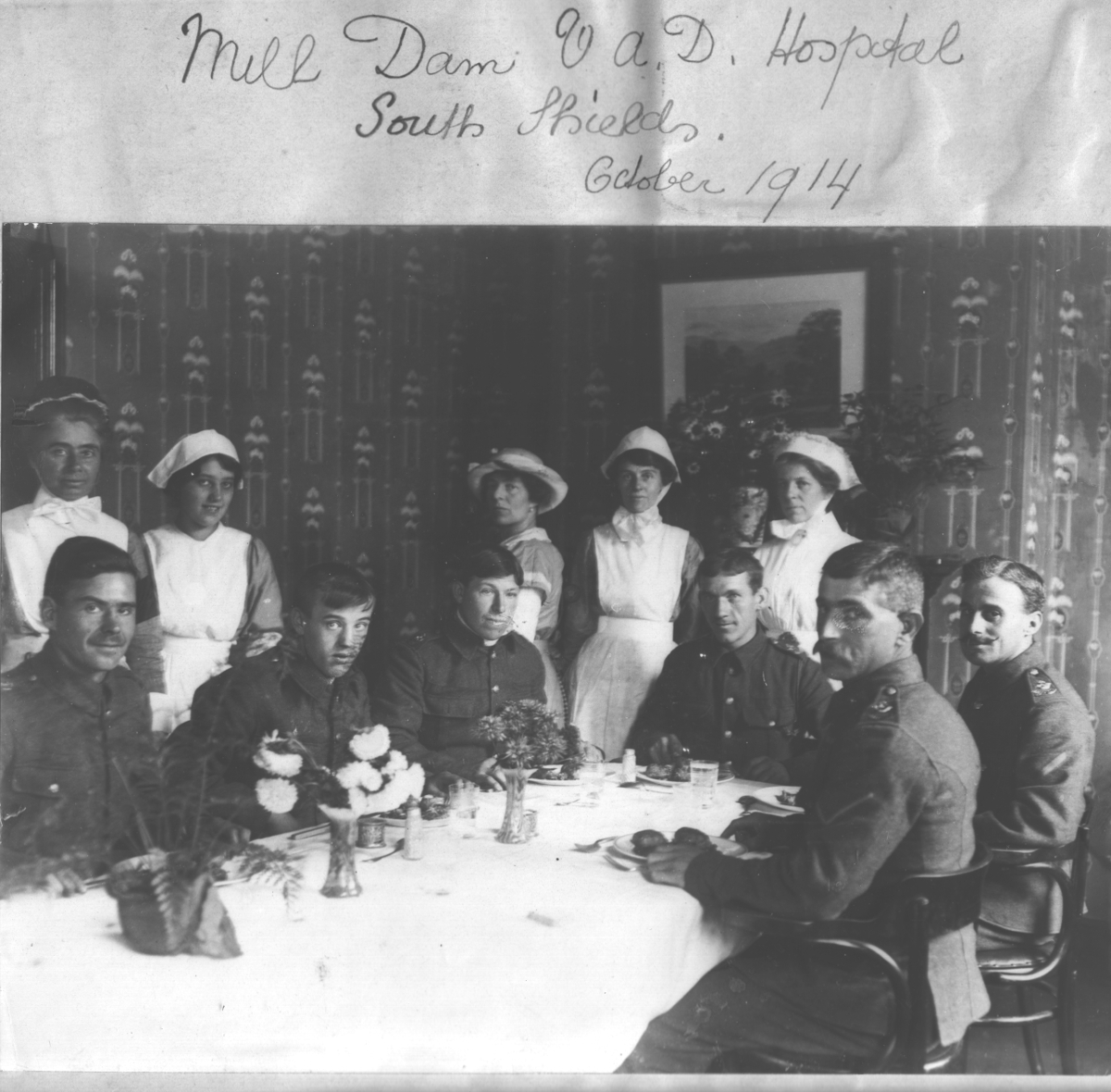



Northumberland
| Unit | Location | Present Status |
|---|---|---|
| 1st Northumberland VA Hospital | Howick Hall, Lesbury | Private residence (gardens open to the public) |
| 2nd Northumberland VA Hospital | Haggerston Castle | Demolished in 1931 |
| 3rd Northumberland VA Hospital | Hextol Terrace and Cotfield House, Hexham | Cotfield House - private residence |
| 4th Northumberland VA Hospital | Dilston Hall, Corbridge | Special Needs FE College |
| 5th Northumberland VA Hospital | 48 Percy Gardens, Tynemouth | Private residence |
| 6th Northumberland VA Hospital | Borough Hall, Wellway, Morpeth and Moore House, Whalton | Borough Hall - Accountancy Practice Moore House - private residence |
| 7th Northumberland VA Hospital | Oxford House, Oxford Street, Whitley Bay | Exact location unknown |
| 8th Northumberland VA Hospital | Alnwick Castle* | Demolished |
| 9th Northumberland VA Hospital | Chesters House, Humshaugh | Private residence |
| 10th Northumberland VA Hospital | Pendower Hall & 6, Kensington Terrace, Newcastle upon Tyne | Pendower Hall - semi derelict 6, Kensington Terrace - Newcastle University Administration Buildings |
| 11th Northumberland VA Hospital | Woolsington Camp | Woolsington Hall - semi derelict |
| 12th Northumberland VA Hospital | Fowberry Towers & Hetton House, Wooler | Private residences |
| 13th Northumberland VA Hospital | Etal Manor, Cornhill-on-Tweed | Private residence |
| 14th Northumberland VA Hospital | Holeyn Hall, Wylam | Private residence |
| 15th Northumberland VA Hospital | Brinkburn High House, Pauperhaugh | Private residence |
| 16th Northumberland VA Hospital | Ashington Infirmary, Ashington | Demolished |
| 17th Northumberland VA Hospital | Callaly Castle | Private residences |
* This hospital was originally established at the Duchess's School, Alnwick.
One auxiliary hospital in Northumberland at this time is missing from the above list - Linden Hall near Longhorsley. Unlike the others, this establishment was not under the jurisdiction of the Red Cross and the Order of St. John. It was instead a private venture run by two redoubtable ladies - Muriel and Eve Adamson, the daughters of Colonel John Adamson, the owner of the hall. Both received the Royal Red Cross (2nd Class) in recognition of their work during the war. (Linden Hall is now a luxury hotel)

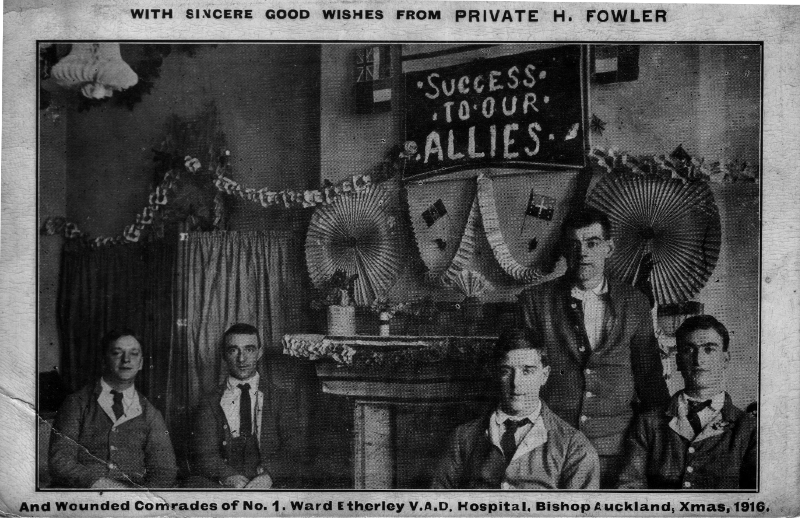
The following photograph is from a postcard sent in 1916 by a George Ellis, who was convalescing at Dilston Hall, to a Miss Violet Popple of Castlethorpe Hall, Lincolshire. Violet never married - was George her sweetheart, and did he fail to return from the war?

The following photograph is somewhat enigmatic. On the reverse side it is signed; "Yours Sincerely, Frank Grady, V.A.D. Hospital, Hunters Rd, Spital Tongues, Newcastle." There is, however, no corresponding entry in the above table. There certainly was a hospital in Hunters Road; it was originally the "Home for Incurables". It is possible that a part of it was occupied by a VAD unit, perhaps associated with the 10th Northumberland VA Hospital. The building was demolished in 2011 for the construction of a new primary school.

As might be expected, the dedication shown by those at work in these establishments led to a number of the women receiving awards or honours, and in a country that badly needed heroic role models the press were only too ready to publish the fact.

In all, 54 women received this or a similar award for war hospital service in Northumberland and Durham; a full list of these is given in the table below:-
| Name | Service | Award |
|---|---|---|
| Adamson, Miss Catherine Eve | Nurse, Linden Auxiliary Hospital, Longhorsley, Northumberland | Royal Red Cross 2nd Class |
| Adamson, Miss Muriel Annie Pearl | Commandant, Linden Auxiliary Hospital, Longhorsley, Northumberland | Royal Red Cross 2nd Class |
| Appleton, Mrs Janet | Quartermaster, 1st Durham V.A. Hospital, Whinney House, and (subsequently) St John's Ambulance Brigade Hospital, Saltwell Towers | MBE |
| Ballingall, Miss Connie | Lady Superintendent and Matron, 4th Durham Auxiliary Hospital, Jeffrey Memorial Hall, Sunderland | Royal Red Cross 2nd Class |
| Booth, Mrs Isabella Mary | Asst Commandant, 16th Northumberland V.A. Hospital, Ashington | Royal Red Cross 2nd Class |
| Boyne, Viscountess Margaret Selina | Organiser, Brancepeth Castle Auxiliary Hospital | CBE |
| Brumell, Mrs Mary | Quartermaster, 5th Northumberland Auxiliary Hospital, Tynemouth | MBE |
| Catcheside, Miss Florence Wilson | Commandant, Auxiliary Hospital Tynemouth | Royal Red Cross 2nd Class |
| Chittleburgh, Mrs Lorna | Sister, Mayfield Auxiliary Hospital, Mayfield, Jarrow on Tyne | Royal Red Cross 2nd Class |
| Coleman, Mrs Emma Longdon | Matron, 3rd Northumberland Auxiliary Hospital, Convalescent Home, Hexham | Royal Red Cross 2nd Class |
| Corbitt, Miss L Gertrude | Commandant, St Johns Ambulance Brigade Hospital, Saltwell Towers, Gateshead | Royal Red Cross 2nd Class |
| Cranage, Miss Margaret | Nursing Member, 4th Northumberland Auxiliary Hospital, Dilston Hall | Royal Red Cross 2nd Class |
| Cuthbertson, Miss Margaret Sharpe | Sister, 4th Durham Auxiliary Hospital, Jeffrey Memorial Hall, Sunderland | Royal Red Cross 2nd Class |
| Dillon, Miss Nora Grace | Commandant, 25th Durham V.A. Hospital, Ashburne, Sunderland | Royal Red Cross 2nd Class |
| Eden, Lady Sybil Frances | Commandant, 19th Durham Auxiliary Hospital, Windlestone Hall, Ferryhill | OBE |
| Eltringham, Mrs Mary | Matron, 7th Northumberland V.A. Hospital, Whitley Bay | Royal Red Cross 2nd Class |
| Errington, Mrs Isabel | Superintendent and Quartermaster, Shotley House Auxiliary Hospital, Shotley Bridge | Royal Red Cross 2nd Class |
| Grey, Miss Mary Lizette | Organiser and Commandant, 13th Northumberland V.A. Hospital | MBE |
| Hanby, Miss Ethel | Charge Sister, No. 7 Durham Auxiliary Hospital, Brancepeth Castle | Royal Red Cross 2nd Class |
| Henderson, Miss Marjorie | Commandant, 3rd Northumberland V.A. Hospital, Hexham | Royal Red Cross 2nd Class |
| Hick, Mrs Annie Prowde | Matron, 23rd Durham V.A. Hospital, Riversdale, Eaglescliffe, Durham | Royal Red Cross 2nd Class |
| Hopwood, Miss Elizabeth Alice | Matron, 10th Northumberland V.A. Hospital, Pendower, Newcastle upon Tyne | Royal Red Cross 2nd Class |
| James, Mrs Diana Lily | Commandant, 14th Northumberland V.A.D. Hospital, Holeyn Hall | MBE |
| Lambe, Miss Grace Darling | Charge Sister, 4th Northumberland V.A.D. Hospital, Dilston Hall | Royal Red Cross 2nd Class |
| Leinster, Miss Elsie Maude | Quartermaster, 1st Durham V.A. Hospital, and St John's Ambulance Brigade Hospital, Saltwell Towers | MBE |
| Marshall, Miss Isabel Norton | V.A.D. Nurse, 10th Northumberland V.A. Hospital, Pendower, Newcastle upon Tyne | Royal Red Cross 2nd Class |
| Mathewson, Miss Margaret | Matron, Auxiliary Hospital, Tynemouth | Royal Red Cross 2nd Class |
| Millar, Mrs Mary Catherine Bruno | Charge Sister, 1st Durham V.A. Hospital, Whinney House, Gateshead | Royal Red Cross 1st Class |
| Newall, Mrs Ethel Nest | Commandant and Organiser of Auxiliary Hospital, Dilston Hall, Corbridge | OBE |
| Oldfield, Miss Hannah | Matron, 6th Northumberland Auxiliary Hospital, Morpeth | Royal Red Cross 2nd Class |
| Palmer, Mrs Marian | Matron and Commandant, 1st Durham V.A.D. Hospital, Whinney House and Saltwell Towers V.A. Hospital | Royal Red Cross 2nd Class |
| Pease, Miss Ella | Commandant, 10th Northumberland V.A. Hospital, Pendower, Newcastle upon Tyne | OBE |
| Petter, Mrs Edith Mary | Commandant, 6th Durham V.A. Hospital, Darlington | OBE |
| Robinson, Miss Rose Ida | 5th Durham V.A. Hospital, North Bailey, Durham | Royal Red Cross 2nd Class |
| Rogers, Mrs Elizabeth Louisa | Nursing Member, 11th Durham Auxiliary Hospital, Sunderland | Royal Red Cross 2nd Class |
| Rowell, Miss Mary | V.A.D. Nurse, 5th Northumberland V.A. Hospital, Percy Gardens, Tynemouth | Royal Red Cross 2nd Class |
| Scott, Miss Isabella | Commandant, 10th Durham V.A.D. Hospital, Mayfield, Jarrow | MBE |
| Shield, Mrs Margaret | Matron, 20th Durham V.A. Hospital, St. Gabriel's, Sunderland | Royal Red Cross 2nd Class |
| Smith, Mrs Rosina H. | Matron, Seaham Convalescent Home, Durham | Royal Red Cross 2nd Class |
| Stalker, Mrs Henrietta | Matron, 2nd Durham V.A. Hospital, South Shields | Royal Red Cross 2nd Class |
| Stobart, Mrs Jessica Octavia | Commandant, 17th Durham V.A. Hospital, Etherley, Bishop Auckland | OBE |
| Streatfield, Mrs Evelyn Olive | Commandant, Hammerton House Auxiliary Hospital, Sunderland | OBE |
| Strover, Mrs Margaret Ann | Matron and Commandant, 8th Durham V.A. Hospital, Normanhurst, W. Hartlepool | Royal Red Cross 2nd Class |
| Swallow, Mrs Clara | Commandant, 22nd Durham V.A. Hospital, Mission House, New Seaham | MBE |
| Talbot, Mrs Kate Helen Ethel | Matron and Commandant, 24th Durham V.A. Hospital, Middleton St. George | Royal Red Cross 1st Class |
| Thompson, Mrs Millicent | Matron and Commandant, 14th Durham V.A. Hospital, Morton House, Co. Durham | Royal Red Cross 2nd Class |
| Unthank, Miss Agnes Elizabeth | Quartermaster, 23rd Durham V.A.D., Eaglescliffe | MBE |
| Vaux, Mrs Emily Eve Lellam | late quartermaster, Hammerton House Auxiliary Hospital, Sunderland | MBE |
| Vaux, Mrs Mary | Matron and Commandant, 21st Durham V.A. Hospital, Herrington Hall, Sunderland | Royal Red Cross 2nd Class |
| Walker, Mrs Isabella Shearer | Commandant, 18th Durham Auxiliary Hospital, Hebburn on Tyne | Royal Red Cross 2nd Class |
| Wallace, Miss Charlotte Keir | Matron, 3rd Durham Auxiliary Hospital, Sunderland | Royal Red Cross 2nd Class |
| Walton-Wilson, Miss Annie Cecilia Elfgyva | Commandant, Shotley House Auxiliary Hospital, Shotley Bridge | Royal Red Cross 2nd Class |
| Warner, Miss Ethel Mary | Lady Superintendent, Auxiliary Hospital, Middleton St George, Durham | Royal Red Cross 2nd Class |
| Wrightson, Miss Hope | Commandant, 23rd Durham V.A. Hospital, Riversdale, Eaglescliffe | Royal Red Cross 2nd Class |
| Wykesmith, Mrs Margaret | Matron and Superintendent, A.N.S.R. No. 5 Durham Auxiliary Hospital | Royal Red Cross 2nd Class |
Medals and certificates were also awarded by regional VAD organisations, and in some cases for service at particular hospitals; the examples shown below are, respectively, a medal awarded to Miss Annie Watson for service at Etherley House, Bishop Auckland, a medal awarded to Miss C. Venus for service given at Jeffrey Hall, Sunderland, and a certificate awarded to Mrs Ellen Davidson.


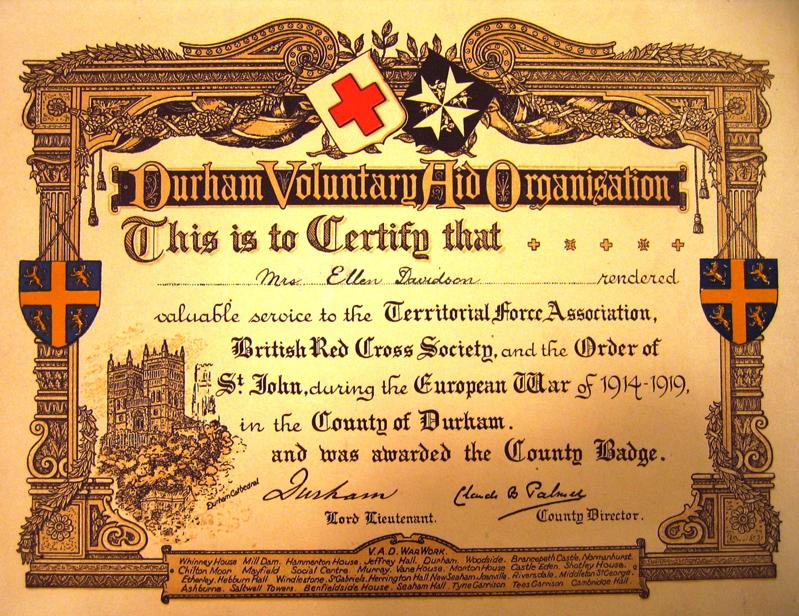
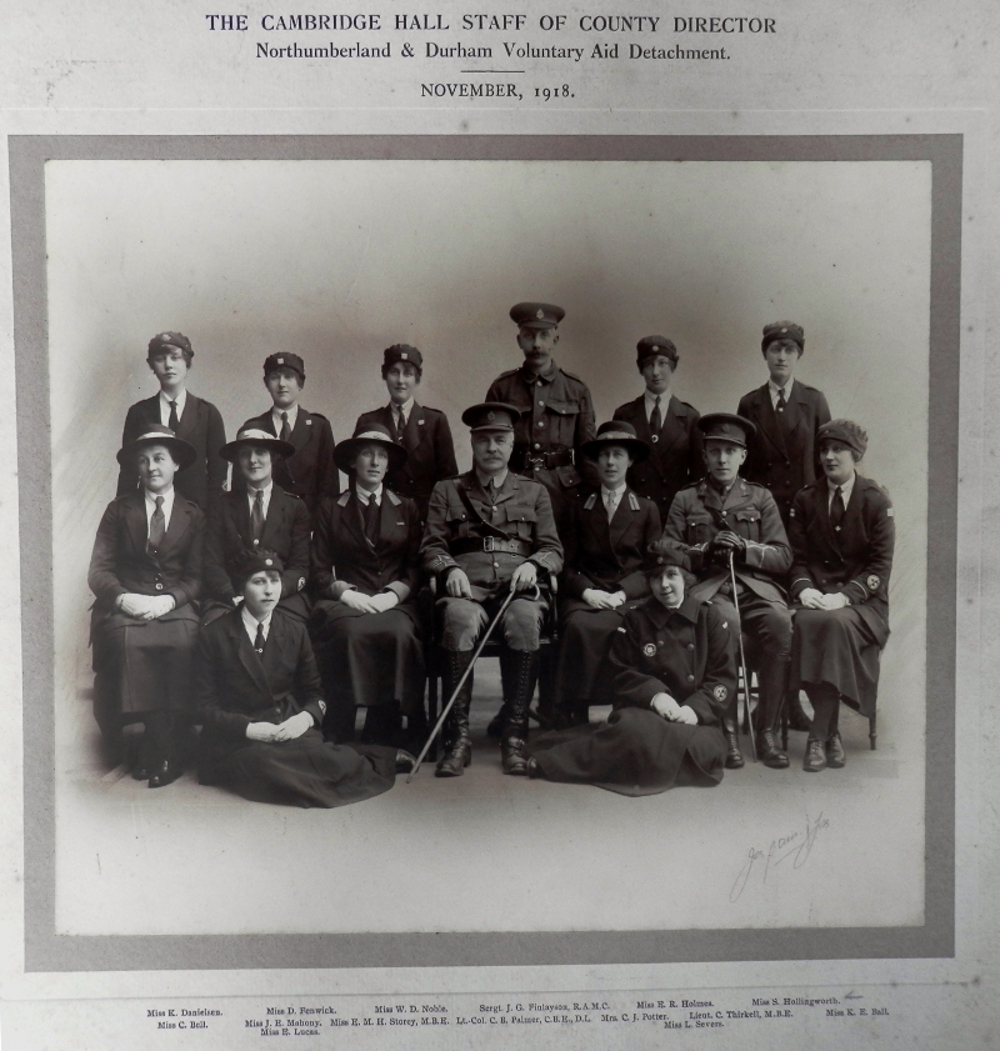
The certificate is of particular interest as it lists all the Durham VAD hospitals, together with three additional entries - Tyne Garrison, Tees Garrison and Cambridge Hall. The first two entries probably refer to general duties carried out by volunteers (possibly male) at each of these garrisons, and not necessarily medical work. The third entry - Cambridge Hall, is a reference to the headquarters of the Northumberland and Durham Voluntary Aid Organisations (Cen 3454 and 3440) at Cambridge Hall in Newcastle upon Tyne. This building was formerly the headquarters of the Northern Division R.A.M.C. and was the location of the 1st Northumbrian Field Ambulance and 1st Northern General Hospital. It was situated on the north side of Northumberland Road, between St James's Congregational Church and the Brady and Martin Chemical works. Today only the church remains, and the sites of Cambridge Hall and part of the Brady and Martin buildings are occupied by private apartments.
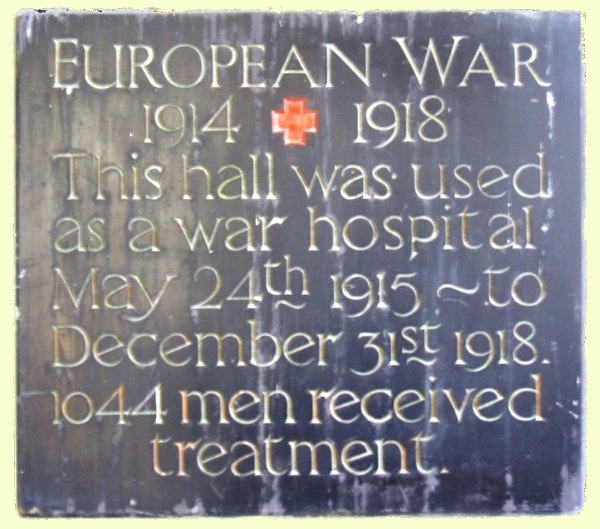
Surprisingly, very few of these buildings have any form of memorials commemorating this part of their history. Exceptions are St Gabriel's Church Hall3 in Kayll Road, Sunderland, and Linden Hall near Longhorsley:
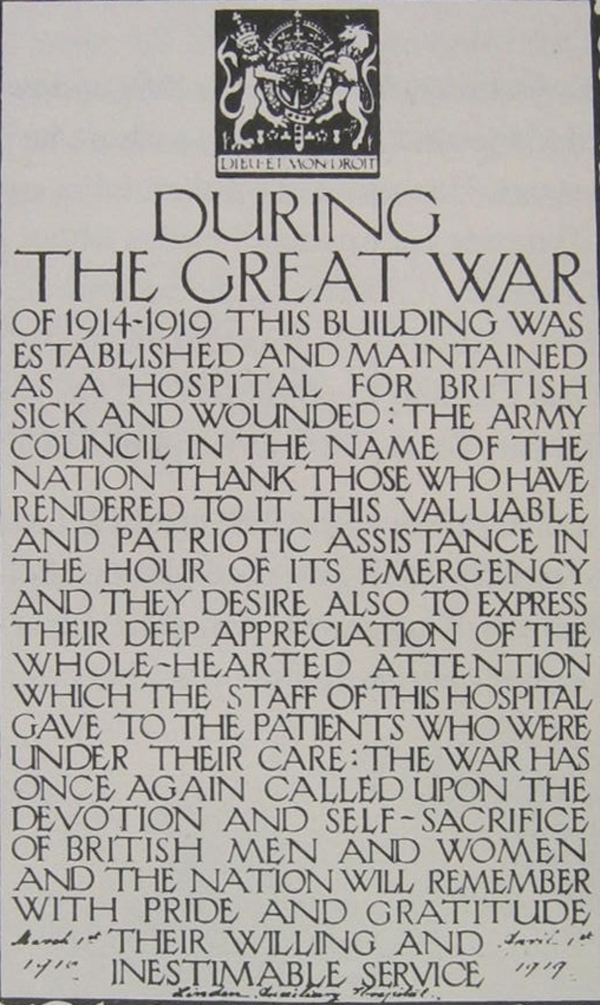
1. From "THE HARTLEPOOLS IN THE GREAT WAR", by Frederick Miller, published in 1920 by Butler & Tanner. My thanks to James Pasby for bringing this out-of-print book to my attention
2. An extensive list of war hospitals can be found on the British Red Cross website
3. A short history of St Gabriel's time as a war hospital was included in a booklet written in 1938 to celebrate the Church's Silver Jubilee, and is reproduced here
4. Information from "The Long, Long Trail here
Further information on VAD workers, in particular service in the battlefield, can be found on the Scarlet Finders website
In addition to the small hospitals entrusted to the VAD detachments, a number of larger hospitals were established throughout the country to provide more extensive medical care for wounded soldiers. Those located in Northumberland are listed below. (see ref. 4)
This hospital, which was established to accommodate 104 officers and 1420 other ranks was located in Armstrong College, Queen Victoria Road, Newcastle upon Tyne, which at that time was part of the University of Durham.
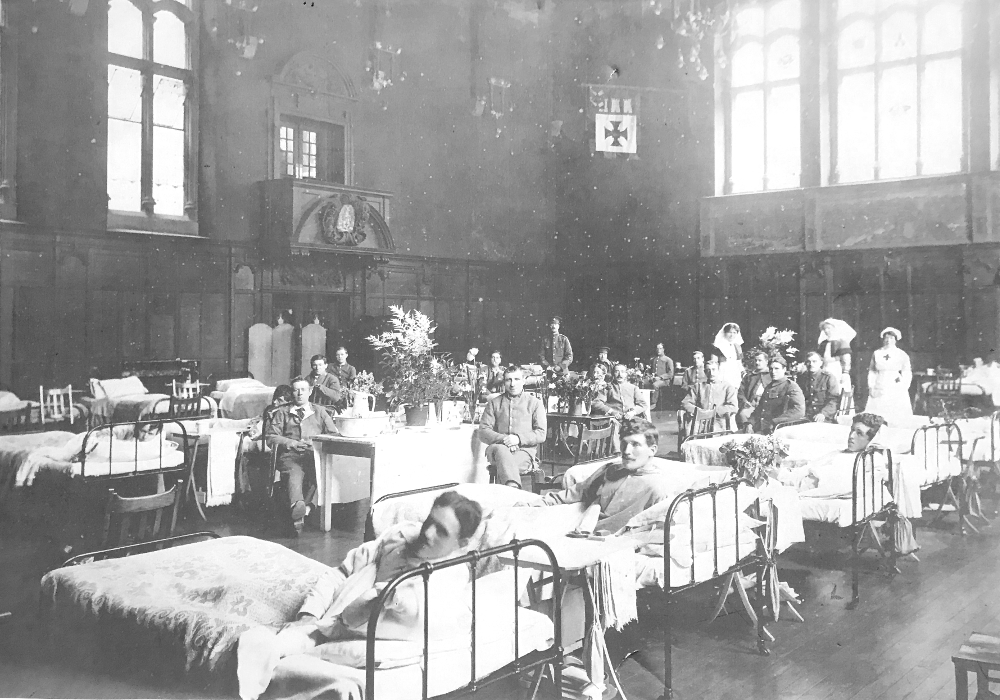
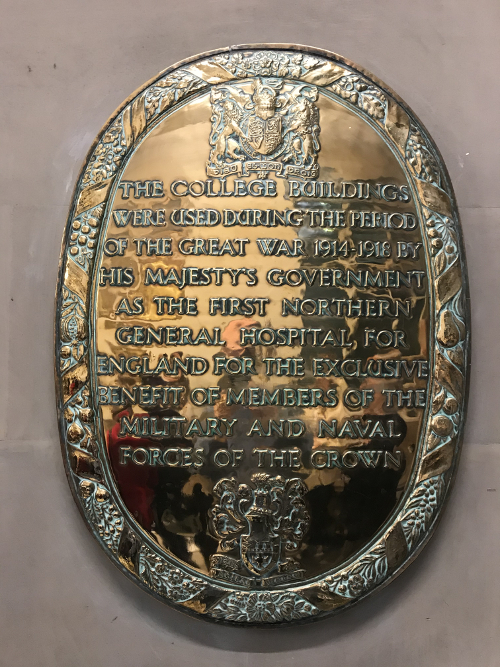
The Northumberland War Hospital was located in the St Nicholas Hospital, Gosforth, which at that time served as the Newcastle upon Tyne City Lunatic Asylum. The building reverted to its former use in 1921, and is now an NHS Psychiatric Hospital.

This specialist hospital, for 48 officers and 552 other ranks, was located on the site of the Newcastle upon Tyne Union Workhouse. This had been expanded over the years to incorporate a number of medical facilities, including a specialist unit dealing with venereal disease. The Workhouse site and buildings evolved into the Newcastle General Hospital, which served the public until 2010.
Alnwick Camp was a large collection of wooden barracks on land adjoining Alnwick Castle in Northumberland. It was built to house volunteers for basic training before they were sent into battle. Later in the war it was used as a convalescent home for soldiers recovering from theikr injuries. After the war the camp was dismantled.
Although located in Northumberland, this hospital was originally commissioned by Gateshead Council as the Gateshead Borough Lunatic Asylum. It opened in 1914 but was immediately requisitioned by the military as a war hospital. It continued as a hospital after the war, being requisitioned once again during WW2. It finally closed in 1995.
© Patrick Brennan - February 2008, January 2011, February 2014, June 2018, November 2019
